🚀 Key Takeaways:
Foundations come first: Children need logical thinking, basic coding, and problem-solving skills before they can use AI meaningfully.
AI should be a tool, not a shortcut: The goal is for children to use AI to support their thinking, not replace it.
Build creators, not just users: Children should learn to question, build, test, and improve, not just prompt AI for answers.
Recently, one of our centre principals shared a conversation with a parent who was eager to enrol their child in a “pure AI” course.
It is easy to understand why.
Since the rise of ChatGPT and other AI tools, many parents have seen how quickly the world is changing. Naturally, they want their children to be ready. They want them to learn the skills of the future. They do not want their children to be left behind.
That intention is good.
But there is one important question we need to ask:
Should a child start with AI before they have learned the basics?
At Chumbaka, we believe the answer is: not yet.
Not because AI is unimportant. In fact, we believe AI is very important. But for children, AI becomes most powerful when it is built on a strong foundation.
AI Should Be a Tool, Not a Shortcut
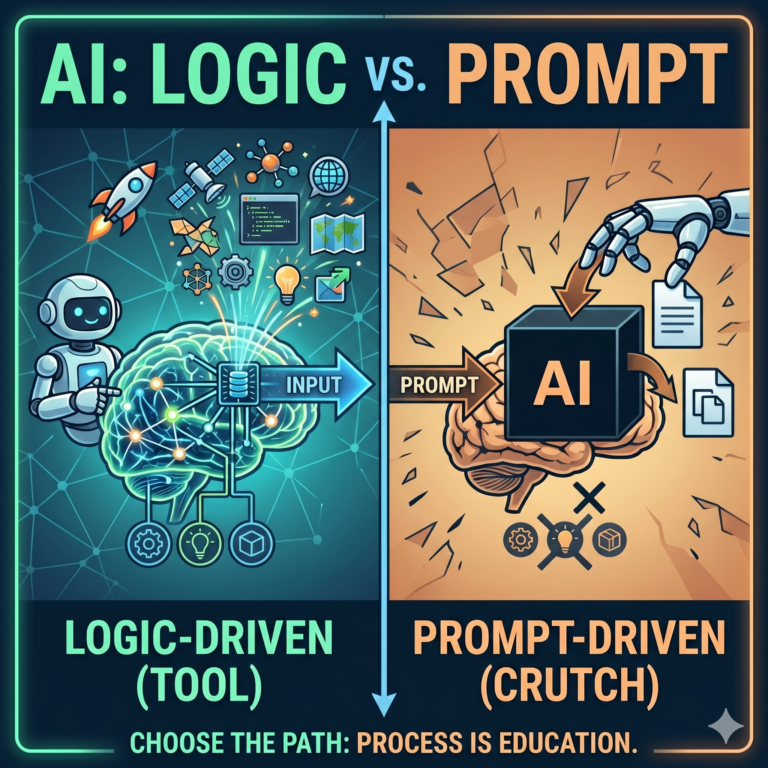
There is a big difference between using AI to support thinking and using AI to replace thinking.
When a child already understands basic coding, they can use AI in a meaningful way. For example, they can ask AI to help debug a script, improve a game, or explore different ways to solve a problem. In this case, the child is still in control. AI becomes a helpful assistant.
But when a child has no understanding of logic, coding, or how digital systems work, AI can easily become a shortcut. The child may ask AI to “make a game” or “create an app” and receive an impressive result. However, they may not understand how it works, why it works, or how to fix it when something goes wrong.
That is the danger.
The child may appear to have created something, but the thinking may not truly belong to them.
Finished Work Is Not the Same as Learning
In a recent podcast interview, cognitive neuroscientist Dr Jared Cooney Horvath points out a critical distinction: AI is a production tool for experts, not a learning tool for novices.
When experts use AI, they can vet through the output because they already understand the fundamentals. However, when novices (like children) use it, they simply offload the thinking process, which prevents any actual learning from occurring.
As parents, it is natural to feel proud when children produce something impressive. A game, a chatbot, a website, or an AI-generated project can look exciting.
But in education, the final product is only one part of the learning.
The real growth happens when children ask questions, make mistakes, test ideas, fix problems, and try again. This process builds patience, confidence, creativity, and problem-solving skills.
If AI gives children the answer too quickly, they may miss the struggle that helps them grow.
This does not mean children should avoid AI. It means they need to learn how to use AI with understanding.
Why Basic Coding Still Matters
Some parents may wonder, “If AI can write code, why does my child still need to learn coding?”
The answer is simple: because coding teaches children how to think.
Coding is not only about typing commands on a screen. It helps children learn how to break a big problem into smaller steps. It teaches them cause and effect. It helps them understand patterns, conditions, sequences, and logic.
For example, before a child can understand how AI makes a decision, it helps them to first understand simple ideas such as:
- “If this happens, then do that.”
- “If the sensor detects light, turn on the LED.”
- “If the score reaches 10, move to the next level.”
These basic ideas may look simple, but they form the foundation for more advanced technology. Without them, AI can feel like a mysterious black box.
The Risk of the “Black Box”
AI can produce answers, images, code, and ideas very quickly. But if children do not understand what is happening behind the scenes, they may become passive users.
They may know how to prompt, but not how to question.
They may know how to generate, but not how to improve.
They may know how to copy, but not how to create.
This is why foundation matters. We do not want children to become users of technology. We want them to become builders, thinkers, and creators.
Creativity Needs Knowledge
For many years, many tech experts told educators to let technology do the job of storing hard “knowledge”, while letting the kids focus on building their soft skills. Just like Google knows everything, knowing now becomes obsolete.
However, brain science tells us the exact opposite.
As Dr. Horvath explains, creativity is the process of your brain “mixing and matching” your existing knowledge while in a diffuse thinking mode. Your brain cannot access the internet while you are taking a walk or sleeping.
If you haven’t embedded the facts and logic into your own biological memory, your brain has nothing to work with. By offloading the “basics” to AI, we aren’t freeing up the mind for creativity—we are effectively starving it of the raw materials it needs to be creative.
So, to create new ideas, children need knowledge in their own minds. They need experiences, facts, concepts, and mental models that they can connect in different ways. When children understand how things work, they have more material to think with.
AI can support creativity, but it cannot replace the knowledge and thinking that children build through learning.
A child who understands coding, design, science, and problem-solving will be able to use AI much more creatively than a child who only knows how to ask AI for answers.
Chumbaka’s Approach: Build the Child Before the Tool
At Chumbaka, we believe children should not only learn how to use technology. They should learn how to build with it.
That is why we guide students through a learning journey that includes:
- Logical thinking, so they can break problems into clear steps.
- Programming fundamentals, so they can understand how instructions, sequences, loops, and conditions work.
- Physical computing, so they can see how code connects with real-world objects such as sensors, motors, lights, and devices.
- Creative problem-solving, so they can design solutions that matter to people and communities.
With these foundations, AI becomes much more meaningful. It becomes a tool children can use to extend their own ideas, not a shortcut that replaces their thinking.
A Message to Parents
It is wonderful that parents are excited about AI. We should encourage that curiosity.
But the best way to prepare children for an AI-powered future is not always to rush them into a “pure AI” course.
The better path is to help them build the foundations that make AI understandable, useful, and creative. A child who learns the basics first will not be left behind. In fact, they will be better prepared.
They will not only know how to prompt AI. They will know how to think, question, build, test, and improve.
That is the kind of learner who can truly thrive in the future.
Let’s teach them to build the future, not just prompt it.